
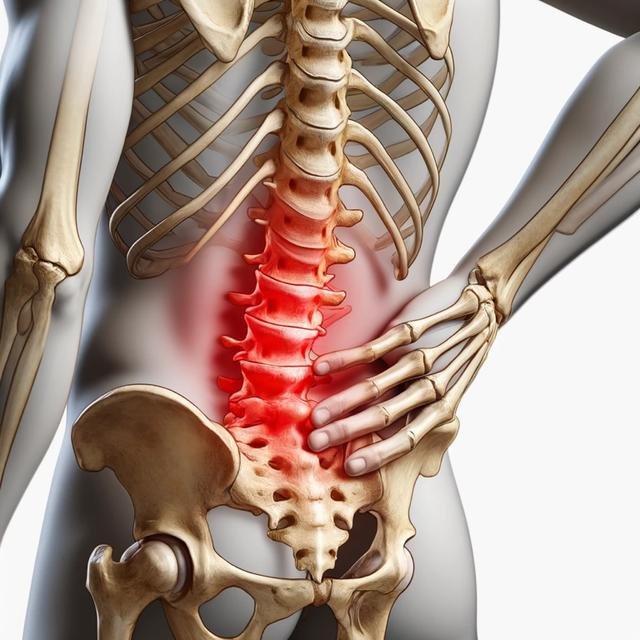
Lower Back Pain
Aching, burning, or sharp discomfort in the lower back.

Understanding the cause of your symptoms is an important first step toward choosing appropriate treatment.
Sciatica describes pain or other symptoms that travel along the path of the sciatic nerve, typically affecting the lower back, buttock, and leg.
The sciatic nerve is formed by nerve roots in the lower spine and extends through the pelvis and down each leg. When these nerve roots become irritated or compressed, symptoms such as shooting pain, tingling, numbness, or weakness may occur.
Sciatica commonly affects one side of the body. Symptoms can range from mild discomfort to more persistent pain that makes sitting, walking, or completing daily activities difficult.
At McGunnigle Chiropractic in Haddonfield, NJ, we focus on assessing your symptoms and discussing conservative care options when clinically appropriate.
Evaluation helps identify possible causes of radiating pain, tingling, or numbness.
Suitable conservative strategies may help improve daily mobility and activity tolerance.
Care options are considered according to your medical history, examination, and goals.
When to Seek Urgent Care: New bladder or bowel control problems, numbness around the groin, or significant or worsening leg weakness require immediate medical evaluation.

Sciatica often involves irritation or compression of nerve roots in the lower spine.
Sciatica is a symptom pattern rather than a single diagnosis. It usually develops when a nerve root in the lower spine becomes irritated or compressed.
Several spinal conditions can contribute to sciatic nerve pain. A careful assessment helps identify possible causes and determine which treatments, investigations, or referrals may be appropriate.
A disc may protrude and irritate nearby nerve roots, causing pain that radiates into the leg.
Narrowing of spaces around spinal nerves can place pressure on nerve roots and contribute to leg symptoms.
Irritation of the sciatic nerve near the buttock may contribute to pain that resembles sciatica.
Age-related changes in spinal discs or joints may narrow nerve pathways and contribute to nerve irritation.
When one vertebra slips relative to another, nearby nerve roots may become compressed or irritated.
Injury can affect spinal structures, while prolonged sitting may aggravate existing nerve-related symptoms.
Important: Not all lower back or leg pain is caused by sciatica. Clinical evaluation helps distinguish nerve-related symptoms from other conditions.
A personalized approach focused on understanding your symptoms, improving movement, and exploring appropriate conservative treatment options.
Sciatica can develop from several underlying conditions, including herniated discs, spinal stenosis, and irritation of spinal nerve roots. Because the cause and severity can vary, treatment begins with a careful assessment.
At McGunnigle Chiropractic in Haddonfield, NJ, we consider your medical history, symptoms, physical examination findings, and personal goals before recommending a care plan.
We review your symptoms, medical history, and movement to identify possible causes and determine whether additional evaluation is needed.
When appropriate, selected manual techniques may be considered to address associated joint stiffness or musculoskeletal discomfort.
Individualized movement recommendations and appropriate exercises may help improve mobility and support daily function.
Your response to care is reviewed over time, with treatment adjustments or referrals considered when necessary.
Individualized Care Matters: Not every cause of sciatica is suitable for chiropractic treatment. Progressive weakness, bladder or bowel changes, or numbness around the groin require urgent medical assessment.
Experiencing sciatic nerve pain? Contact McGunnigle Chiropractic to discuss your symptoms and available appointment options.
SCHEDULE AN APPOINTMENT Call (856) 310-4445